
Repair vs Replace in changing in Europe
Remember Removable Phone Batteries? The EU Wants Some of That Back

Back when we had removable batteries and you changed the SIM by popping off the plastic back, you didn’t need a special tool, a heat gun and a prayer. If something went wrong, you could at least see the inside of your device. In a small, quiet way, that era is what the EU “Right to Repair” is trying to bring back.
Today, I want to unpack what this law actually means for normal people in the EU (and in Romania), beyond the headlines.
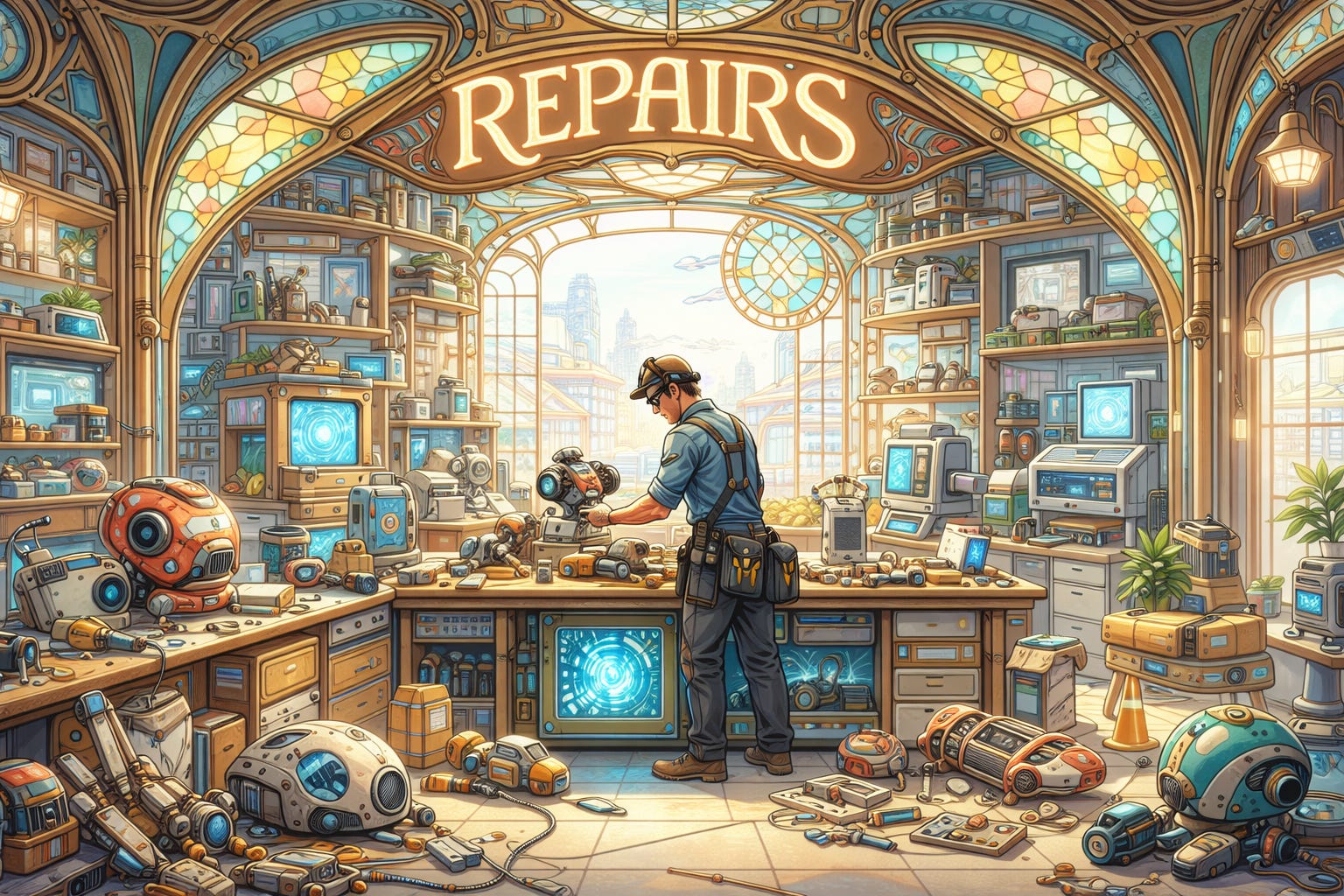
What is the EU Right to Repair, in human language?
In 2024, the EU adopted Directive (EU) 2024/1799 on common rules promoting the repair of goods, usually just called the Right to Repair Directive. The European Parliament explains its goal very simply: make repair easier, cheaper and more attractive than throwing things away.
I have vivid memories growing up with my father repairing all kinds of small appliances around the house so we can continue to use them. It sounds like we were “sustainable” before we knew the word for it.
This directive doesn’t cover every product in the universe, but it focuses on the big household and tech items that create a lot of waste and are expensive to replace. Each member state (including Romania) has to write this into national law by mid‑2026, so some details will vary, but the core ideas are the same.
What changes for you when something breaks?
What should we see changing in the next few months for us, consumers? Let’s say your washing machine dies after a few years, or your phone screen cracks. What’s different compared to “the old normal”?
1. Repair is not just “nice to have”, it must be offered
The directive says manufacturers must offer repair for a list of common products even after the standard legal guarantee has ended, as long as fixing them is technically possible.
That means:
For things like washing machines, dishwashers, fridges, TVs, vacuum cleaners, and more, the brand can’t just shrug and say “buy a new one” if a repair is realistic.
They have to keep basic repair options on the table for a number of years after sale (the exact product list and duration are defined at the EU level and will evolve).
It doesn’t magically make every repair cheap, but it pushes against pure “throwaway” behaviour.
2. If you choose repair under guarantee, you can get extra protection
Today, in the EU, you already have a minimum 2‑year legal guarantee for consumer goods. The new directive adds a clever incentive: if a product is repaired under that legal guarantee, the guarantee must be extended by 12 months after the repair.
In practice: The washing machine breaks at month 20 → You choose to have it repaired instead of replaced or refunded. → After the repair, your legal guarantee is extended by one more year.
So instead of being “punished” for picking repair, you are rewarded with extra protection. Lawmakers are very explicit that this is meant to make repairs more attractive for consumers and slow down premature replacement.
3. There should be a simple place to find repair options
The directive asks the Commission to create a European online repair platform where you can search for repairers and refurbished goods in your area.
Think of it as a kind of “repair marketplace”: you put in your product and location, and you see:
authorised service centres
independent repairers
sometimes community repair initiatives (repair cafés, etc.)
For consumers in Romania, our European Consumer Centre (ECC Romania) is already sharing information and will likely become one of the places pointing to these options.
What producers now have to do (the stuff they might not advertise)
Behind the scenes, this directive is a big nudge for manufacturers. They are expected to:
Provide spare parts and tools for a minimum number of years for covered products (so that repairs are actually possible).
Allow independent repairers to access repair information and tools on fair terms, instead of locking everything behind “authorised only” barriers.
Stop using certain software or technical tricks that block repair or reuse, for example preventing parts from working if they’re not “original” when there is no genuine safety reason.
Offer a “European Repair Information Form” on request, giving you a clear written quote with price, time, and conditions before you commit.
Law firms and policy analyses highlight that this will force brands to rethink product design, documentation, and after‑sales strategies, especially in appliances and consumer electronics.
It’s not the revolution repair activists dreamed of, but it’s a real shift in the default.
What you should pay attention to as a normal person
This is the practical part. When something breaks, or when you’re buying new devices, here’s how to actually use these rules in your favour.
1. Don’t rush into replacement calls
If a device covered by the directive fails:
Check your purchase date. If you’re still within the legal guarantee, remember that choosing repair can extend your guarantee by a year.
When you speak to the seller or manufacturer, use clear language like:
“I’d like to understand my repair options under the EU Right to Repair rules before we talk about replacement.”
You don’t have to quote article numbers. Just naming “Right to Repair” and “repair options” signals you know this is on the table.
ECC Romania already encourages consumers to explicitly ask for repair options and to contact them if a trader wrongly insists on replacement only.
2. Ask for the repair information form
If you’re thinking of paying for a repair (in or out of guarantee), you can request the European Repair Information Form.
This is a standard template where the repairer must clearly state:
what they will do
how long it will take
how much it will cost (labour + parts)
how long the repair itself will be guaranteed
It sounds bureaucratic, but it gives you written proof and lets you compare different repairers before saying yes.
3. When buying new, think “repairable” as well as “nice”
The directive doesn’t tell you which brand to buy, but it nudges you to ask different questions.
Beyond “does it look good and fit my kitchen?”, try:
How long does the manufacturer commit to keeping spare parts available?
Is there an authorised service in your country, and what do reviews say?
Does the product have a good reputation for repairability (even just checking a few forums can help)?
Does the brand talk about repair and refurbishment at all, or only about “innovative new features”?
As sustainability barometers keep showing, European consumers say they want more durable products and are willing to pay a bit more for them—if they’re convinced the value is real and not just green marketing.
Right to Repair laws are the background; your buying choices are the foreground.
What still needs to change
The directive is progress, but it’s not magic.
Groups like Right to Repair Europe point out a few gaps:
The list of products is still limited and will need expanding (for example, more small appliances, wearables, newer categories).
Repair can still be too expensive compared to replacement, especially for low‑ to mid‑priced devices, unless producers rethink pricing and design.
Some manufacturers may comply in a minimal way while still steering customers gently toward “new” instead of “fix”.
In other words, the law opens the door; it doesn’t drag companies through it. That part will come from:
how strictly national authorities enforce it
how loud consumers are about wanting repair, not just replacement
how often we actually use the rights we now have
I’d love to see producers go beyond compliance: publishing clear repairability scores, supporting independent repair networks, and designing devices where a cracked screen or dead pump is a fixable event, not a death sentence.
Why am I sharing this in The Home Companion newsletter
For someone managing a household, EU laws can feel very distant. But they touch real moments:
The washing machine that dies one year too early.
The fridge that “can’t be fixed” because the one crucial spare part is mysteriously unavailable.
The smartphone becomes unrepairable because a third‑party screen was installed.
Part of what I want Kivo app to do, eventually, is make these rights visible and actionable:
Store purchase and guarantee dates so you know when you’re protected.
Flag which devices fall under EU Right to Repair rules.
Help you track repairs and extended guarantees over time.
Until then, I’d love this edition to do one small thing for you: the next time a big appliance fails, I want “Do I have a right to repair here?” to pop into your head before “I guess I need a new one.”
If you’ve had a situation where a brand told you “we don’t repair that, only replace”, reply and tell me what happened and in which country. Those are exactly the stories that show where the law is working — and where it still needs to grow teeth.
Well with that subject line you know AI didn’t take over yet 🫣